
Facing a Clean Water Act investigation can feel overwhelming, especially when you are dealing with technical environmental regulations, federal investigators, and the risk of significant civil penalties. If you have received a notice of violation, information request, or administrative order, you are likely concerned about compliance exposure, operational disruption, and reputational impact.
In this situation, you need counsel who understands Clean Water Act enforcement and can respond quickly and strategically to protect your interests, preserve documentation, and position your case for the strongest possible outcome.
Our Houston Clean Water Act defense lawyers at Hilder & Associates, P.C. represent individuals and organizations facing Clean Water Act allegations throughout Texas. Contact us at (713) 234-1416 to schedule a free consultation to discuss how we can help you.
What Is the Clean Water Act?
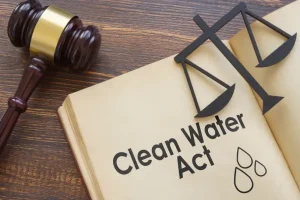
The Clean Water Act (CWA), codified under 33 U.S.C. §§ 1251–1387, is the primary federal law governing pollution of the nation’s surface waters. Congress enacted the statute to restore and maintain the physical, chemical, and biological integrity of waterways nationwide.
The law regulates discharges through a permitting system. It also sets water quality standards that apply to a broad range of activities:
- National Pollutant Discharge Elimination System (NPDES) permits
- Technology-based effluent limitations
- Water quality standards and total maximum daily loads (TMDLs)
- Enforcement provisions, including civil and criminal penalties
- Citizen suit provisions allowing private enforcement actions
- Funding mechanisms for publicly owned treatment works
What Constitutes a Pollutant?
Under the CWA, the definition of “pollutant” is broad and covers far more than chemicals or industrial waste. Section 502(6) of the statute includes a wide range of materials that, when discharged into protected waters without proper authorization, can trigger enforcement actions:
- Heat
- Munitions
- Agricultural waste
- Dredged spoil and solid waste
- Sewage and garbage
- Chemical wastes and biological materials
- Radioactive materials
- Wrecked or discarded equipment
- Rock, sand, and cellar dirt
- Industrial and municipal waste
- Incinerator residue
Scope of Protected Waters
The phrase “waters of the United States,” often abbreviated as WOTUS, defines which bodies of water fall under federal jurisdiction. WOTUS has been one of the most contested legal concepts in environmental law for decades.
The definition has shifted through multiple Supreme Court decisions and rulemaking efforts, and its current scope determines whether your property or operations are subject to federal regulation or fall under state oversight alone.
Common Breaches of the Clean Water Act
Clean Water Act violations can arise from a wide range of activities. Many businesses or landowners may not realize they are in violation until an enforcement action begins.
Stormwater Pollution
Federal regulations require facilities that discharge stormwater associated with industrial activity to obtain NPDES permits. Construction sites disturbing one or more acres of land must also secure coverage under general permits. Failure to implement proper stormwater management controls, maintain best management practices, or file required notices of intent can all result in enforcement actions and substantial fines.
Pretreatment Violations
Industrial facilities that send wastewater to publicly owned treatment works must follow federal pretreatment requirements under 40 C.F.R. Part 403. These standards are designed to prevent pollutants from disrupting treatment operations, passing through the system untreated, or contaminating biosolids. Common violations include exceeding allowable pollutant levels, failing to properly monitor discharges, and submitting incomplete or inaccurate reports.
Wastewater Management Violations
Wastewater management violations involve failures to properly treat, monitor, or control discharges, resulting in noncompliance with environmental regulations and potential harm to public water systems and ecosystems. Improper handling of wastewater can lead to several types of enforcement actions under the CWA:
- NPDES permit violations
- Exceeding permitted discharge limits
- Failure to report spills or unauthorized releases
- Operating without a required permit
- Falsifying discharge monitoring reports
Wetlands Violations
Section 404 of the CWA regulates the discharge of dredged or fill material into wetlands and other waters. Developers and landowners who fill, drain, or alter wetlands without obtaining a permit from the U.S. Army Corps of Engineers face significant civil and criminal liability. Even unintentional impacts to wetland areas can trigger enforcement proceedings.
Concentrated Animal Feeding Operation (CAFO) Violations
Large livestock operations that qualify as concentrated animal feeding operations are required to secure NPDES permits for any discharges into surface waters. Runoff from these facilities can carry excess nutrients, pathogens, and sediment into nearby streams and rivers. The EPA has stepped up enforcement against CAFOs, and operations in Texas within the Gulf Coast watershed are under heightened scrutiny due to their proximity to environmentally sensitive areas.
Oil Spill Prevention
Section 311 of the CWA addresses the discharge of oil and hazardous substances into navigable waters. Facilities that store oil above certain threshold quantities must prepare and implement Spill Prevention, Control, and Countermeasure (SPCC) plans. Failure to maintain adequate containment structures, conduct regular inspections, or respond appropriately to releases can result in both administrative penalties and referrals for criminal prosecution.
Discrepancies in Enforcement
Clean Water Act enforcement is not always consistent. Several factors can influence how aggressively regulators pursue a case:
- Political priorities at the federal and state levels
- Available agency resources and staffing
- Geographic location and proximity to sensitive ecosystems
- Whether a citizen suit has been filed
- The perceived severity of environmental harm
- Prior compliance history of the regulated entity
How Hilder & Associates, P.C. Can Help
Our Houston Clean Water Act defense lawyers work with businesses, developers, and municipalities facing enforcement pressure from the Texas Commission on Environmental Quality (TCEQ) and the EPA. We build defense strategies tailored to the specific federal and state environmental regulations at issue in your case, including:
- Defending against NPDES permit violation allegations
- Responding to EPA administrative orders and compliance directives
- Challenging TCEQ enforcement actions and proposed penalties
- Representing clients in environmental litigation at the federal and state levels
- Conducting internal compliance audits and risk assessments
- Negotiating consent decrees and settlement agreements
- Defending against environmental crime charges
FAQ: Answers for Clean Water Act
How Does the EPA Enforce the Clean Water Act?
The EPA enforces the CWA through administrative compliance orders, civil judicial actions, and criminal prosecution under 33 U.S.C. § 1319. Penalties escalate based on the nature and severity of the violation, the violator’s compliance history, and the degree of environmental harm caused.
What Are the Potential Penalties for Violations of the Clean Water Act?
Civil penalties under the CWA can reach $68,446 per day, per violation, following recent inflation adjustments. Criminal penalties are even more severe, with negligent violations carrying fines up to $25,000 per day and up to one year of imprisonment. Knowing violations double those maximums, and repeat offenders face further enhanced penalties that can fundamentally alter a business’s financial future.
What Are Common Defenses Against Environmental Lawsuits?
Several legal defenses may apply depending on the specific facts and circumstances of your case. Our attorneys employ defense strategies, including:
- Lack of federal jurisdiction over the water body in question
- Permit shield defense based on compliance with permit terms
- Statute of limitations arguments
- Constitutional challenges to regulatory overreach
- Disputing the classification of the alleged pollutant
- Challenging the accuracy of sampling and testing methods
Consult Our Houston Clean Water Act Defense Lawyers
When you’re facing a Clean Water Act enforcement action, the legal team you choose can shape the trajectory of your case. Hilder & Associates, P.C. brings focused, strategic defense to every matter we handle on behalf of Houston-area clients. Call us at (713) 234-1416 or reach out online to schedule a free consultation with a Houston Clean Water Act defense lawyer today.